Todays Trend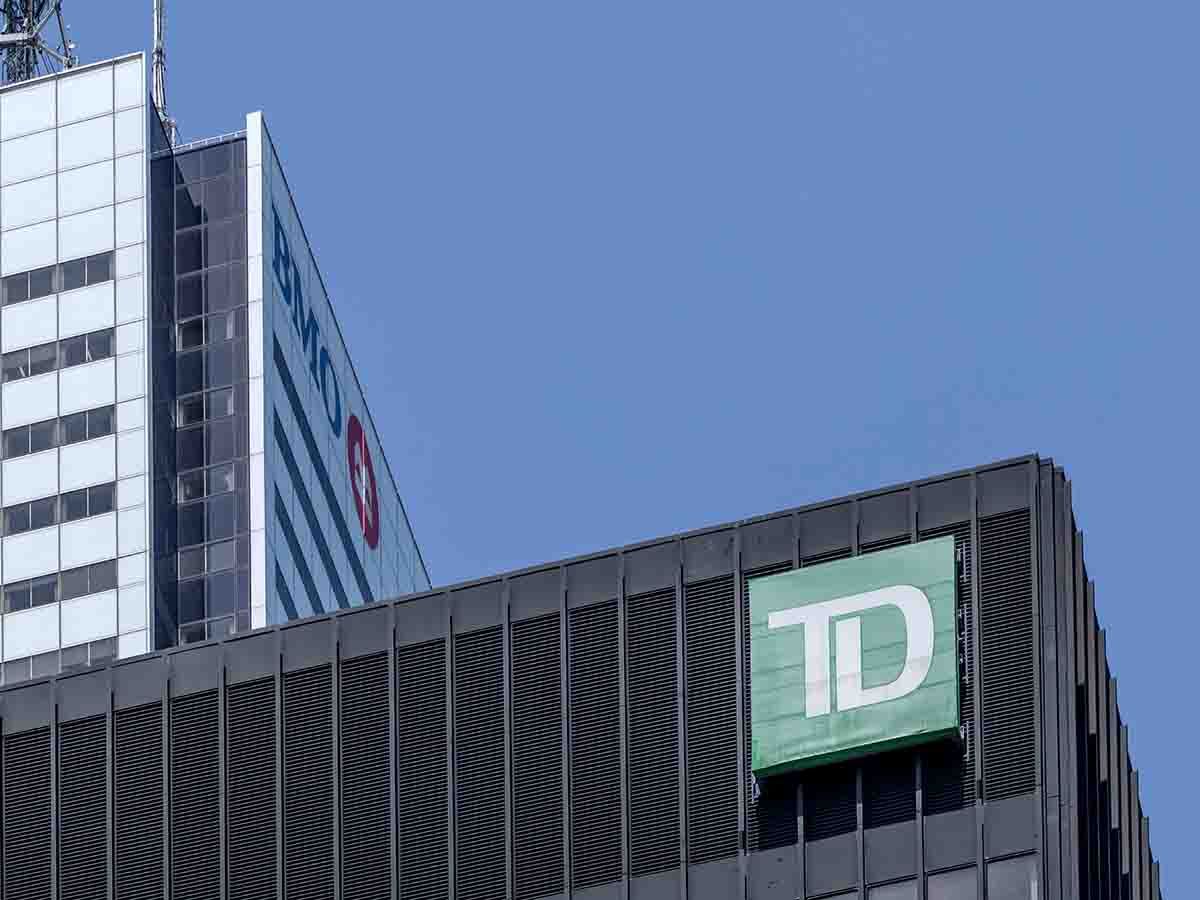
Skip to Content News Archives Economy Defence Energy Oil & Gas Renewables Electric Vehicles Mining Commodities Agriculture Real Estate Mortgages Mortgage Rates Finance Banking Insurance Fintech Cryptocurrency Defence Work Wealth Smart Money Wealth Management Investor Personal Finance Family Finance Retirement Taxes High Net Worth FP Comment Executive Women Puzzmo Newsletters Financial Times Business Essentials More Innovation Information Technology FP500 Podcasts Small Business Lives Told Tails Told Shopping Financial Post Store Obituaries Place a Notice Advertising Advertising With Us Advertising Solutions Postmedia Ad Manager Sponsorship Requests Classifieds Place a Classifieds ad Working Profile Settings My Subscriptions My Offers Newsletters Customer Service FAQ News Economy Energy Mining Real Estate Finance Defence Work Wealth Investor FP Comment Executive Women Puzzmo Newsletters Financial Times Business Essentials Home Finance Banking TD and BMO are in the crosshairs of a U.S. regulator. Here's why Two of Canada’s largest financial institutions landed on a list of banks accused of 'debanking' TD Bank and BMO were both called out in a report by a U.S. regulator on debanking. Photo by Peter Power / Financial Post This week, two of Canada’s largest financial institutions, Toronto Dominion Bank and Bank of Montreal , landed on a list of banks accused by a United States regulator of “debanking” or otherwise discriminating against clients for political reasons.
But what exactly does that mean and what consequences could they face? The Financial Post explains. Subscribe now to read the latest news in your city and across Canada.
Exclusive articles from Barbara Shecter, Joe O'Connor, Gabriel Friedman, and others. Daily content from Financial Times, the world's leading global business publication. Unlimited online access to read articles from Financial Post, National Post and 15 news sites across Canada with one account.
National Post ePaper, an electronic replica of the print edition to view on any device, share and comment on. Daily puzzles, including the New York Times Crossword. Subscribe now to read the latest news in your city and across Canada.
Exclusive articles from Barbara Shecter, Joe O'Connor, Gabriel Friedman and others. Daily content from Financial Times, the world's leading global business publication. Unlimited online access to read articles from Financial Post, National Post and 15 news sites across Canada with one account.
National Post ePaper, an electronic replica of the print edition to view on any device, share and comment on. Daily puzzles, including the New York Times Crossword. Create an account or sign in to continue with your reading experience.
Access articles from across Canada with one account. Share your thoughts and join the conversation in the comments. Enjoy additional articles per month.
Get email updates from your favourite authors. Create an account or sign in to continue with your reading experience. Access articles from across Canada with one account Share your thoughts and join the conversation in the comments Enjoy additional articles per month Get email updates from your favourite authors Sign In or Create an Account or An Aug. 7, 2025, executive order from U.S.
President Donald Trump kicked off a supervisory review of nine large retail banks by The Office of the Comptroller of the Currency (OCC), one of a handful of powerful bank regulators in the U.S. Trump’s executive order was titled Guaranteeing Fair Banking for All Americans and it suggested banks had used “unacceptable practices to restrict law-abiding individuals’ and businesses’ access to financial services on the basis of political or religious beliefs or lawful business activities.” It further suggested that some financial institutions had participated in surveillance programs targeting people who were involved in the Jan. 6, 2021, events at the U.S. Capitol.
On Wednesday, the OCC released its report on the nine largest banks it supervises: JPMorgan Chase Bank, Bank of America, Citibank, Wells Fargo Bank, U.S. Bank, Capital One, PNC Bank, TD Bank , and BMO Bank . The OCC said all nine banks had policies or practices between 2020 and 2025 that may have required, encouraged, or otherwise influenced banks to deny or limit access to financial services to Americans because of their political or religious beliefs or lawful business activities.
Some of these were broad reputation risk policies that lacked clear standards and objective, risk-based criteria, the regulator said. “Today’s report provides irrefutable evidence that the nation’s largest banks have denied, debanked and discriminated against customers and lawful businesses,” said Jonathan V. Gould, Comptroller of the Currency.
“Fair access to financial services is not a mantra — it is a mandate. The Trump Administration is committed to ending the weaponization of finance against hardworking Americans, once and for all.” Breaking business news, incisive views, must-reads and market signals. Weekdays by 9 a.m.
By signing up you consent to receive the above newsletter from Postmedia Network Inc. A welcome email is on its way. If you don't see it, please check your junk folder.
The next issue of Posthaste will soon be in your inbox. We encountered an issue signing you up. Please try again BMO is named six times in the 45-page report, while there are 14 references to TD.
The Canadian banks aren’t accused of “debanking” or refusing to serve a client. Rather, they are flagged for having policies or practices that could invite additional scrutiny or assign a higher risk profile to certain groups, such as a firearms company or a nonprofit organization with a mission of promoting pro-life views. For example, following a 2022 credit request by a customer that manufactured empty firearm magazines, among other tactical products, BMO evaluated the reputational risk under the bank’s environmental and social financing guidelines.
“The customer was part of a family of companies that had a ‘strong relationship’ with the bank dating back several decades,” the OCC report said. “Although the bank’s senior risk officer approved maintaining the relationship, the risk officer required continuous monitoring of the sales.” According to the report, the bank established a quarterly trigger to ensure that trailing twelve month tactical sales remained below 30 per cent of total sales. The report took issue with BMO’s environmental and social risk policy, which it said advised that account managers should “understand their customer’s business and if it is not aligned with our Firearms and Ammunition Guidance ... they should work with customers to align their practices with BMO’s requirements prior to the next credit action.” If customers declined to meet the requirements, the policy said account managers “should work to transition the customer out of the bank.” TD is named in two instances where the OCC accuses banks of associating a customer’s political, religious or social views with a higher level of risk.
However, the report said the Canadian bank did not ultimately deny service on such grounds. In one example given in the report, a loan request from a nonprofit organization with a mission of promoting pro-life views required escalation to TD’s reputational risk committee and the organization’s national director was flagged as having a “high political and media profile.” In another example, a line of credit to a faith-based health-care sharing ministry was determined by TD to pose elevated reputational risk should the relationship be “disclosed by the media or groups that reject their practices.” The OCC said the bank also noted that “the moral and religious requirements” of the ministry appeared to conflict with TD’s values of diversity and inclusion. In another case from February 2021, TD assessed extending a loan for a nonprofit organization promoting anti-immigration positions.
The bank’s public affairs group conducted a “negative media search” and reputation risk assessment, the report said, adding that the search was prompted by a media inquiry. “The public affairs group assigned a ‘High’ reputation risk rating to the organization, as a result of controversy surrounding its founder, allegations by the Southern Poverty Law Center that it was a ‘hate group,’ and media coverage of its anti-immigration positions,” according to the report. However, the nonprofit ultimately withdrew the application because it did not meet the loan’s requirements.
Jeff Roman, a spokesperson for Bank of Montreal, referred a request for comment to the following statement from the Bank Policy Institute, a U.S.-based bank advocacy group. “The banking industry supports fair access to banking services and has been working to ensure that government regulations and policies enable banks to serve law-abiding customers,” the statement said. “We support efforts to establish clear and consistent standards that promote access while maintaining sound risk management, including the administration’s recent efforts to prioritize supervisory attention on material financial risk rather than reputational risk.
We look forward to continued engagement with the administration and Congress as they consider additional proposals that ensure that political or religious beliefs do not unfairly affect customers’ access to banking services.” TD has not responded to a request for comment. The probe fits with the Trump administration’s insistence that it must right alleged wrongs undertaken or permitted by the previous administration under president Joe Biden. The 2025 executive order accused some financial institutions of participating in “government-directed surveillance programs” targeting conservative and the political right in the wake of Jan. 6.
It also accused the previous government of suggesting banks flag individuals who made peer-to-peer payments that involved terms like “Trump” or “MAGA” and claimed bank regulators used supervisory scrutiny and other influence over regulated banks to direct or otherwise encourage politicized or unlawful debanking activities. In January 2025, Trump commuted the sentences or granted unconditional pardons to individuals convicted of offences related to the rioting and forced entry at the U.S. Capitol.
The debanking probe also fits with Republican concerns about government overreach and privacy. Some U.S. Republican lawmakers were critical of the freezing of bank accounts and crypto assets in Canada during the Ottawa and Coutts, Alta., protests over COVID restrictions in 2022.
The Office of the Comptroller of the Currency is one of a handful of U.S. regulators that oversees banks operating in the country. Is has broad powers and can impose a wide range of remedial and monetary penalties against parties including bank directors, officers, employees and controlling shareholders. These include cease and desist orders, monetary penalties, discretionary restrictions and remedies including a requirement to make restitution.
On Tuesday, the OCC imposed a $750-million assessment against Bank of America for deficient anti-money laundering compliance. The OCC was also involved in TD’s settlement of anti-money-laundering deficiencies: In October 2024, it imposed a cease and desist order, $450 million in civil penalties and restrictions on TD’s growth in the U.S. Join the Conversation This website uses cookies to personalize your content (including ads), and allows us to analyze our traffic.
Read more about cookies here . By continuing to use our site, you agree to our Terms of Use and Privacy Policy .
Source: Financial Post